- The Wealthy Prognosis
- Posts
- Deathly Afraid
Deathly Afraid
How we (I) slowly spiral into oblivion.

Howard & Peter
March 01, 2026
OUR ADDICTION TO DYING

“Though the physicality of death destroys us, the idea of death may save us.” - Irvin Yalom, MD.
As professionals working in healthcare, we often get recommended the book When Breath Becomes Air by Paul Kalanithi. But to be clear, it is not a book intended solely for medical professionals. It is a poignantly written memoir by a neurosurgeon who passed far too young at the age of 37 to metastatic cancer. I started and finished the book within the first week or two of January 2026. Needless to say, there were many moments throughout the book where I found myself on the verge of tears. Many parts of the book naturally touch upon the intense turmoil he faced as he faced his own mortality. In so doing, he gives us glimpses into the many facets of his identity and purpose.

As of late, I’ve had a penchant for more existential topics—the marriage of philosophy and psychiatry/psychology is a fascinating one. One of my favorite textbooks of all time, after all, is Existential Psychotherapy by Irvin Yalom, a pioneer psychiatrist in this area. Shortly after reading Dr. Kalanithi’s book, I moved right into Staring at the Sun also by Dr. Yalom, a comparatively shorter and easier read on death anxiety than his textbook. It explores an array of themes that are unique to the human experience of life and death. Though not the most exciting read, I find it eloquent in describing one of the most primal anxieties and the ways that humans cope with it.

For all of recorded history, humanity has always struggled with the idea of death and dying. In this struggle, humans have come up with machinations as attempts to deny death itself. A prime example is the fantastical idea, deeply rooted in many religions, that there is life after death—a big, fat NO to the finitude of death. We see this in many practices still alive today, such as burial (often with worldly possessions that would guide our loved one into the afterlife). Why do we fret about death to the extent that we assuage ourselves with such frank denial? Dr. Yalom, heavily influenced by Greek philosopher Epicurus, argues that 1) to enter death is to return to the same oblivion from whence we were born and 2) when we die and our consciousness fades, we (unironically) cannot know that we are dead, and thus cannot be bothered by that fact.

For many people, it is not the finality of death itself, but the process of dying that scares them. This certainly is the case for me. In dying, there is a profound loneliness, one that bores into the fabric of our very existence. We will leave the world as we entered it: alone. Nobody can accompany us in the dying process. The fact that we embark on life’s bleakest journey in solitude is daunting and understandably a source of great anxiety. Moreover, one may wonder, if we are all going to die anyway, is there any actual meaning to our lives? But I think it is because we are all going to face the same inescapable fate that underlies the specialness of our lives. This is where I start to ponder Dr. Kalanithi’s memoir, and why it evoked such powerful emotion in my reading.
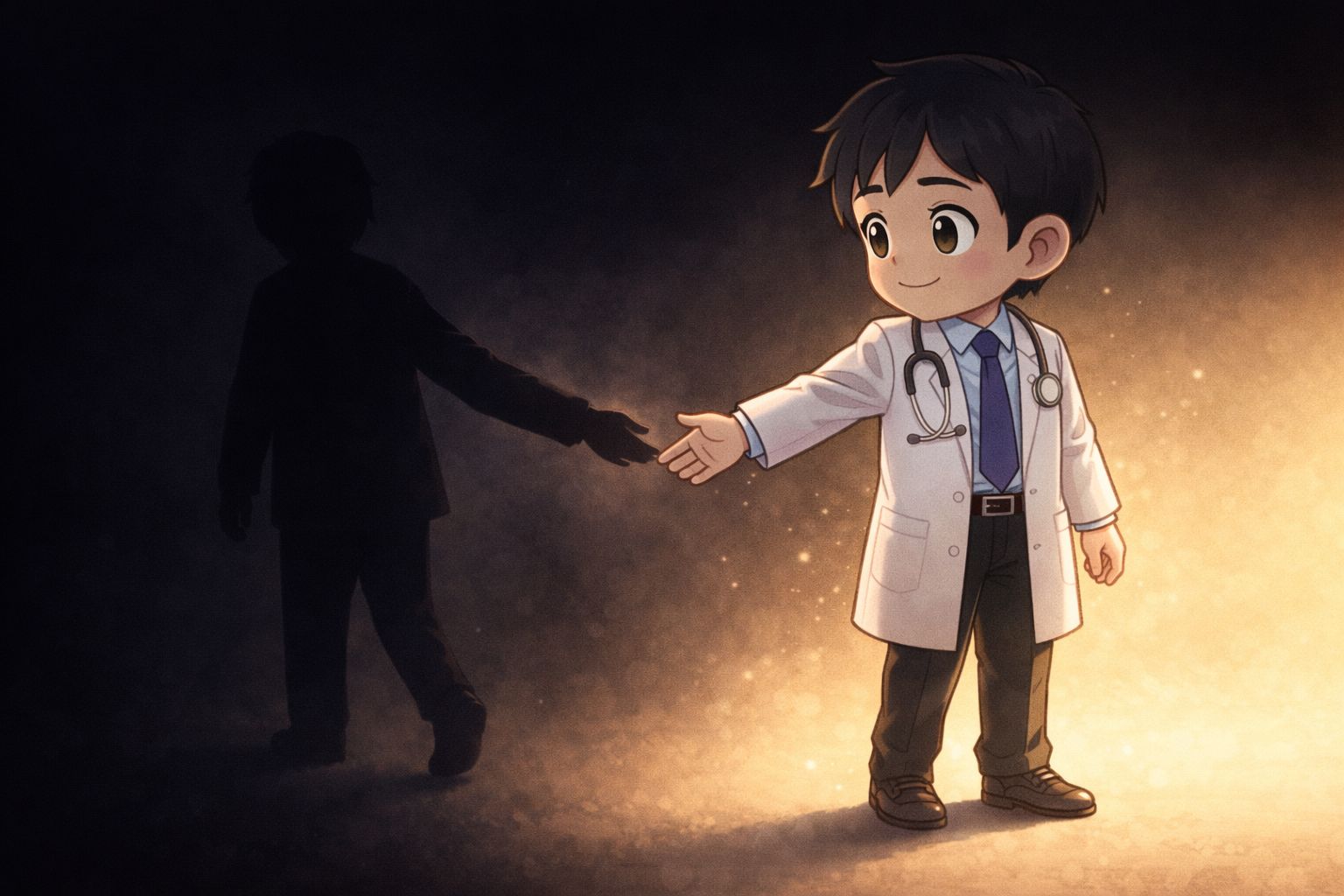
One recurring discussion (and sometimes disagreement) between me and Peter is how to optimize our lives for fulfillment and enjoyment. Anyone familiar with Peter knows he is a planner extraordinaire. Though he very much values his relationships, his modus operandi is to secure a financial future in which he can take care of those around him: with time and with abundance. This often translates into relentless sacrifice in the present timeline. I am no stranger to sacrifice either, with the last decade of my life being dedicated to medical training. Even in my early career, I’ve worked tirelessly, often picking up extra shifts as we build toward a shared vision. However, there now emerges an itch to start living rather than simply existing while awaiting the arrival of an unborn future.

A cornerstone of having a good death is living a good life. It is understood that, for most, there is a ripe time to die. This fact has been the source of so much anxiety for me. What if, amidst all our planning and working, we don’t even make it to our goals? What if we don’t make it to the next year or even day? Never mind the severance of death, but the gripping terror of any separation looms as a potential. Peter does not share the same anxieties.

Much of this is due to the fact that he enjoys solitude and his work. The dedication to his work is reminiscent of Dr. Kalanithi’s experience outlined in his memoir. Though I find my work deeply gratifying and powerfully moving, I cannot deny the occasional intrusive fantasy of life outside of medicine. On select days, it can be hard to exact purpose or meaning to life as a whole. Whereas Peter is fueled by the fact of his own impermanence, I am often enveloped and paralyzed. It may feel as though I am still seeking whereas he has a delineated path.

Peter has patiently endured my recurrent lamenting throughout the course of our relationship. It feels like life’s burnout hits particularly hard every few months as I spiral into all of these weird and abstract questions. I’ve sent him on rollercoasters of discussions around meaning and life dissatisfaction. It can be very difficult for Peter to understand where I am coming from. But in all fairness, I also find it hard to understand myself, especially given the objective abundance we have in our lives. He thinks it is the product of my recent binging of these texts that exacerbated my anxiety from an everyday worry to an existential one.

Perhaps that may be true, but I also think I’ve been more subconsciously preoccupied with and processing endings lately: completion of training (and being thrust directionless into attendinghood), wrapping up old hobbies, and closing chapters on past friendships. Even the hobby of flower arranging is stricken by the very transient nature of its beauty. It was only at the conclusions of the aforementioned was I then able to appreciate their meaning, value, and purpose.

As professionals working in healthcare, we get an upfront seat to death and dying. I’ve seen many colleagues grow numb and callous to this process as it becomes more normalized and ingrained in their everyday. I was in a similar position, and it wasn’t until recently that I found myself more intimately connected with this concept. For how deeply I dived into this sinkhole, Peter has done a great job in pulling me back out. As he puts it: our present is the culmination of all our past decisions, and our future will be the culmination of our present decisions. Dr. Irvin Yalom iterated something similar through the emotion of regret: it is the experience of this singular emotion that serves as its own teacher and guide to ensure a better future outcome.

XOXO,
Howard and Peter